Delivering robust, scalable, and digital-ready solutions to future-proof your operations

Driving Innovation from Concept to Road

Mobility engineering services empower vehicle manufacturers and suppliers to innovate, optimize, and accelerate the development of advanced mobility solutions. These services span every phase of the product lifecycle—starting with preliminary concept and industrial design, stretching through systems integration, prototyping, software and hardware development, and culminating in large-scale manufacturing and operational support.

Services Provided

Concept design and feasibility studies

Architecture, modelling, and simulation

Embedded software and firmware development

Hardware design and system integration

Validation, testing (mechanical, electronics, EMC, compliance)

Advanced cockpit development (infotainment, digital clusters,
HUD)

Prototyping and rapid manufacturing

Lifecycle management and aftermarket support.

ADAS and connectivity (object detection, sensor fusion, telematics, V2X)

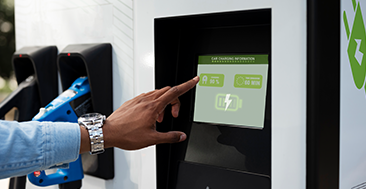
E-mobility solutions (EV chargers, drive inverters, charging station management)

Mobility Solutions

Vehicle ECU Solutions

Vehicle electronics form the backbone of all modern automotive systems, enabling reliable control, monitoring, and automation across critical functions. Our solutions encompass advanced body electronics, robust gateway modules, Transmission Control Electronic Units (ECUs), and comprehensive On-Board Diagnostics (OBD) systems. These subsystems manage everything from lighting, climate, and safety features to seamless communication between hundreds of individual control modules. By providing custom architecture, hardware integration, and intelligent power management, we empower OEMs and Tier-1 suppliers to achieve optimal vehicle performance, safety, and regulatory compliance in modern mobility platforms. Our expertise extends to sensor-driven control, secure communication protocols such as CAN and FlexRay, and future-ready architectures for electric and autonomous vehicles.

Body electronics control the vehicle’s auxiliary and comfort functions, including lighting systems (interior and exterior), power windows, door locking/unlocking mechanisms, HVAC systems (heating, ventilation, and air conditioning), seat controls, and windshield wipers. These modules enhance occupant convenience, safety, and vehicle aesthetics. Our expertise spans designing modular body control units that enable flexible configurations, robust fault tolerance, and integration with vehicle networks to ensure smooth communication and efficient power management within the vehicle ecosystem.

Gateways serve as critical communication hubs in modern vehicles, enabling secure and seamless data exchange between different in-vehicle networks and subsystems such as powertrain, infotainment, ADAS, and body control domains. They facilitate protocol translation and data filtering across CAN, LIN, FlexRay, Ethernet, and other automotive buses. Our gateway solutions are designed for high throughput, stringent cybersecurity, fail-safe operation, and integration with cloud connectivity, enabling over-the-air updates and remote diagnostics.

The Transmission Control Electronic Control Unit (ECU) manages gear shifting in automatic and semi-automatic transmissions to optimize vehicle performance, fuel efficiency, and smoothness. It processes inputs from sensors related to engine speed, throttle, vehicle speed, and driver commands, then dynamically controls actuators to engage appropriate gears and clutches. Our Transmission Control ECU software and hardware solutions deliver precision control algorithms, real-time monitoring, and compliance with automotive safety standards like ISO 26262 to ensure high reliability and durability across diverse driving conditions.

Diagnostics and OBD systems provide continuous monitoring of vehicle health by collecting data from various electronic control units and sensors. These systems detect faults, emissions compliance issues, and operational anomalies, enabling early identification of performance degradation or failures. We develop embedded diagnostic software compliant with regulatory protocols (e.g., OBD-II, UDS and J1939), fault code management, and standard communication interfaces to support remote diagnostics, telematics, and predictive maintenance, helping reduce downtime and optimize fleet operations.

Vehicle communication protocols underpin all data exchange inside vehicles and with external systems. These include CAN/CAN-FD (Controller Area Network) for real-time control data, LIN (Local Interconnect Network) for low-speed subsystem communication, FlexRay for high-speed fault-tolerant networking, Ethernet for high-bandwidth applications. Our engineering expertise encompasses protocol stack development, integration, testing, and compliance ensuring interoperability, latency management, and security to support connected and autonomous vehicle functionalities.

AUTOSAR (AUTomotive Open System ARchitecture) is a global automotive standard that defines a standardized software architecture for automotive electronic control units. It facilitates reusability, scalability, and interoperability of software components across different vehicle platforms and manufacturers. Our AUTOSAR services include architecture design, application development, system integration, BSW configuration, CDD development and compliance testing for both Classic and Adaptive AUTOSAR platforms. This enables clients to accelerate development, reduce costs, and maintain high software quality in complex vehicle electronics systems.

E Mobility Solutions

As the industry shifts toward sustainable transportation, our E-Mobility engineering focuses on high-efficiency power electronics and reliable infrastructure for electric vehicles. We design and develop off-board AC/DC chargers, DC-DC converters, and on-board charging platforms suitable for 2-wheel, 3-wheel, and 4-wheel electric vehicles. Our solutions cover EVCC/SECC, Power Distribution Units (PDUs), traction inverters, motor controllers, and integrated charging station management systems—ensuring optimum performance, safety, and interoperability in the evolving EV landscape. With our EV platforms (which the client can use to do a quick build) and our deep expertise in EV systems and advanced diagnostics, we empower manufacturers and service providers to scale clean mobility, comply with international standards, and accelerate market adoption.

We engineer a range of electric vehicle chargers tailored for diverse applications—from residential AC chargers delivering up to 22 kW for efficient home charging to industrial-grade DC fast chargers supporting high-power outputs up to 350 kW. Our chargers comply with global standards for safety, interoperability, and energy efficiency, incorporating smart charging features such as load balancing and user authentication. The high-power DC fast chargers are designed for rapid charging stations, supporting multiple charging protocols (CCS, CHAdeMO) and equipped with advanced cooling and power management for reliable, fast energy transfer to EV batteries. Our charger platforms are designed for power ranging from 1.2kW (for 2/3 wheelers) to 350kW (For buses and trucks)

DC-DC converters are critical power electronics that step down high-voltage battery power to lower voltage systems needed by vehicle auxiliaries and electronics. We develop highly efficient, compact, and thermally managed converters designed to minimize power losses and ensure stable voltage delivery. These converters support diverse EV platforms—ranging from two-wheelers to heavy-duty vehicles—balancing performance with system integration challenges.

Our on-board chargers facilitate the conversion of AC power from grid sources to DC power compatible with the EV battery pack. We design OBCs scalable from 1.2 kW for electric bikes to 22 kW for passenger cars, optimizing form factor, thermal management, and power factor correction to maximize charging efficiency. Our OBC solutions support multiple grid voltages and frequencies and incorporate safety protections, communications for smart charging, and compliance with international standards.

Our engineered PDUs enable intelligent power management within EV architectures by distributing electrical energy safely to subsystems such as propulsion, lighting, HVAC, and infotainment. PDUs embed sensing, switching, and protection functions, supporting diagnostics and system redundancy. We design PDUs with modularity and scalability to fit various vehicle classes and optimize weight and thermal performance.

Traction inverters and motor controllers convert DC battery power to controlled AC signals driving the electric motor’s speed and torque. Our solutions provide high-efficiency, regenerative braking capabilities, and precision control optimized for multiple motor types (induction, permanent magnet synchronous motors). With embedded real-time processing and safety features, these systems help maximize vehicle range, performance, and reliability.

The H-Bridge module is a critical power electronics component used for bidirectional current flow in motor drive circuits or power converters. Our H-Bridge modules rated up to 22 kW feature robust semiconductor switching devices, integrated gate drivers, and advanced protection circuitry, delivering precise control and efficient power conversion for traction and auxiliary motors or power supplies.

We provide comprehensive charging station management solutions that enable remote monitoring, billing, user authentication, and maintenance of EV chargers. These cloud-connected platforms support load balancing, fault diagnostics, and interoperability with various charger models and protocols. Our management systems facilitate fleet operators and utilities in optimizing charger utilization and energy consumption.

The EVCC (inside the vehicle) and SECC (inside the charging station) controllers handle communication and control for charging sessions, ensuring safe and efficient energy delivery. Our designs implement standardized communication protocols such as ISO 15118 and OCPP, enabling features like plug-and-charge, smart charging, and energy management. These controllers coordinate charging parameters, authentication, and error handling to comply with international standards and user expectations.

ADAS and Connectivity Solutions

Advanced Driver Assistance Systems (ADAS) and connectivity solutions are central to the evolution of safe and intelligent vehicles. Our comprehensive services include vehicle/object detection, driving scenario recognition using cutting-edge vision and radar technologies, sensor fusion for real-time decision-making, and surround-view systems for enhanced situational awareness. Vehicle tracking, telematics, and cloud integration enable data-driven fleet management and predictive maintenance. With expertise in V2X communications, collision avoidance algorithms, and remote diagnostics, we help automotive brands realize smart mobility, improved driver safety, and future-proofed, connected vehicles. These solutions combine hardware and software innovation to deliver seamless integration, robust cybersecurity, and exceptional reliability for both passenger and commercial vehicles.

The Collision Avoidance System uses a network of sensors including radar, LIDAR, and cameras to detect potential obstacles and imminent collision threats. Our system provides real-time alerts and, where applicable, initiates automatic braking or steering manoeuvres to prevent or mitigate accidents. Integrated algorithms analyse vehicle speed, distance, and trajectory, enhancing driver safety by reducing reaction times and preventing collisions in diverse environments.

Turn Assistance improves vehicle safety during turning manoeuvres by monitoring blind spots, oncoming traffic, and cyclists. Utilizing radar and camera inputs through sensor fusion, it alerts drivers of unsafe turn conditions and may intervene with braking or steering corrections to avoid side-impact collisions. The system also recognizes the threat type based on vehicle category, time to collision and determines the criticality of the warning generated. This system is especially effective in urban traffic scenarios and enhances situational awareness in complex intersections.

Surround Awareness provides a 360-degree view around the vehicle using multiple wide-angle cameras. It offers drivers enhanced visualization of their environment, facilitating manoeuvres such as parking and tight space navigation. The system integrates with display units to present real-time composite images, alerting to nearby obstacles and moving objects for safer driving.

This system monitors the vehicle interior to assess occupant presence, posture, attention, and activity using infrared cameras and AI algorithms. It supports features such as drowsiness detection, child presence alerts, and occupant behaviour analysis to improve passenger safety and comfort. The system also facilitates customized environment settings like lighting and climate control based on occupant preferences.

Passenger Interaction Systems enable seamless communication between occupants and vehicle infotainment, safety, and control systems through multiple modalities. Features include camera based gesture recognition, voice commands, touchscreen interfaces, proximity based solutions, haptics and personalized assistance. These systems enhance the user experience while minimizing driver distraction and supporting multi-modal interactions within the vehicle cabin.

Pedestrian Detection systems utilize computer vision and sensor fusion to identify pedestrians and cyclists near the vehicle path. The system intelligently identifies pedestrians at high risk in the vehicle path and generates critical warning. It also cautions about pedestrians who could get in to the path after assessing the criticality. The system alerts the driver and can trigger automatic braking to prevent accidents with vulnerable road users. It is optimized for various lighting and weather conditions, successfully increasing urban traffic safety.

Traffic Sign Detection identifies and interprets road signs such as speed limits, stop signs, and warnings using high-resolution cameras and image recognition algorithms. The system provides real-time feedback or integrates with adaptive cruise control and speed limiter functions, assisting drivers in compliance with traffic regulations and enhancing situational awareness.

Cockpit Solutions

The automotive cockpit is evolving rapidly, becoming the nerve centre of driver experience and connectivity. We deliver end-to-end engineering for infotainment systems, digital instrument clusters, smart displays, and Heads-Up Displays (HUDs). Our cockpit solutions integrate high-resolution visuals, voice-activated interfaces, and real-time data—providing drivers with intuitive control, vital vehicle information, and seamless entertainment. Smart cockpit electronics power functionalities such as navigation, vehicle status monitoring, climate management, and wireless connectivity, all delivered through ergonomic and visually stunning displays. Our systems are engineered for durability, user-friendliness, and global compliance, supporting both traditional and electric vehicles at scale

Our infotainment systems deliver a seamless and intuitive user experience by integrating media, connectivity, vehicle information, and smartphone apps into a unified interface. Equipped with high-resolution touchscreens, multi-modal controls, and customizable user profiles, these systems support entertainment, communication, and navigation needs. Our engineering includes software stack development, UI/UX design, integration with vehicle networks, and support for emerging standards like Android Automotive and Apple Car Play.

Digital instrument clusters replace traditional analog gauges with fully customizable high-definition displays that provide real-time vehicle data, alerts, and driver assistance information. Our solutions offer crisp visuals, configurable layouts, and integration with ADAS for dynamic feedback on speed, navigation, safety warnings, fuel economy, and more. These clusters support enhanced graphics rendering, daylight readability, and driver personalization features.

Smart Displays serve as interactive vehicle control hubs, featuring multi-touch capabilities, haptic feedback, intelligent proximity controls and connected services integration. Designed for driver, co-passenger and rear passenger use, they control HVAC, lighting, seat settings, and infotainment, often distributed across the cabin for multi-zone control. Our displays combine hardware engineering with embedded software to deliver responsiveness, durability, and consistent performance under automotive environmental conditions.

Heads-Up Displays project critical driving information—such as speed, navigation cues, and collision warnings—directly onto the windshield or dedicated combiner lenses in the driver’s line of sight. Our HUD designs prioritize clarity, low latency, and minimal distraction, integrating with vehicle sensors and ADAS to provide contextual, real-time data. Advanced HUDs support augmented reality overlays for enhanced situational awareness in complex driving scenarios.

Our multimedia and navigation systems offer comprehensive entertainment and vehicle guidance features, combining audio/video playback, streaming, voice input, and real-time GPS navigation with traffic updates. The focus is on delivering innovative solution to India specific scenarios with navigation information. We engineer scalable solutions tailored to passenger cars and commercial vehicles, integrating cloud connectivity for map updates, point-of-interest information, route optimization.

Smartphone integration enables seamless connectivity between the driver’s mobile device and the vehicle’s infotainment system. We support major platforms like Apple Car Play, Android Auto, and Mirror Link, allowing users to access apps, voice assistants, contacts, and messages safely through the vehicle’s UI. Our solutions ensure security, minimal latency, and smooth handover between devices.

Our generative AI powered personal assistant technology offers natural language interaction for hands-free control of vehicle functions, navigation, media, and communication. Powered by advanced speech recognition and contextual understanding, it enhances driver focus and safety by reducing manual inputs. It is a digital companion that dissolves the barrier between driver and machine. It learns preferences, predicts needs, communicates vehicle state naturally, and transforms the car into a personalised, intelligent space. These systems support multiple languages, customizable wake words, and integration with third-party voice services and IoT devices.

Mobility Services

Cybersecurity

Vehicle electronics form the backbone of all modern automotive systems, enabling reliable control, monitoring, and automation across critical functions. Our solutions encompass advanced body electronics, robust gateway modules, Transmission Control Electronic Units (ECUs), and comprehensive On-Board Diagnostics (OBD) systems. These subsystems manage everything from lighting, climate, and safety features to seamless communication between hundreds of individual control modules. By providing custom architecture, hardware integration, and intelligent power management, we empower OEMs and Tier-1 suppliers to achieve optimal vehicle performance, safety, and regulatory compliance in modern mobility platforms. Our expertise extends to sensor-driven control, secure communication protocols such as CAN and FlexRay, and future-ready architectures for electric and autonomous vehicles.

We provide specialized advisory support for customers aiming to adopt “secure by design” principles from product conception through deployment and continual delivery. Our holistic approach includes:

  • Risk assessment analysis tailored to automotive environments
  • Threat modelling and architecture reviews to identify vulnerabilities early
  • Strategic recommendations for embedding robust security measures into product requirement and design documentation
  • Support for process alignment with regulatory and industry frameworks

Our experts’ help clients achieve, maintain, and demonstrate compliance with major global standards and certifications, including:

  • IEC-62443 (industrial and automotive control system security)
  • ISO 21434 (road vehicle cybersecurity management)
  • NIST 800-53 (federal information system security)
  • IoT device certifications, GDPR, IEC-15408, and PCI-DSS
  • DevSecOps design and integration for secure development pipelines

This covers gap analysis, certification preparation, documentation support, and process redesign to ensure security is ingrained at every development and operational stage.

We partner with customers across all phases of the secure development lifecycle, supporting the development of security-conscious software and hardware:

  • Secure coding practices and code reviews
  • Robust threat mitigation strategies per ISO/SAE standards
  • Architecture and module-level risk evaluation
  • Implementation of best-in-class secure boot, OTA update, and authentication mechanisms
  • Continuous improvement in product security during enhancements and updates

Our testing services ensure products are resilient before market launch, including:

  • Manual and automated Vulnerability Assessment (VA) and Penetration Testing (PT), targeting software, hardware, and communication interfaces
  • Integration of SAST (Static Application Security Testing), SCA (Software Composition Analysis), Fuzz Testing, and DAST (Dynamic Application Security Testing) within DevSecOps pipelines
  • Support for pre-certification and audit preparation for NIST 800, CIS, and other device certifications
  • Thorough analysis and remediation support for compliance with regulatory and customer-specific requirements

Security doesn’t end at deployment—our Security Operations Centre (SOC) and advisory services help maintain vigilance and rapid response:

  • Continuous monitoring and protection of products, platforms, and operational ecosystems
  • Advisory to improve post-deployment security posture, including patch management and incident response
  • Proactive monitoring for vulnerabilities in open-source components and third-party libraries commonly used in automotive software stacks
  • Real-time threat intelligence and security analytics to stay ahead of emerging threats

Our Automotive Penetration Testing service simulates real-world cyberattacks on vehicle systems, Electronic Control Units (ECUs), networks, and cloud-connected infrastructure to proactively identify, exploit, and remediate security vulnerabilities. We conduct both grey-box and white-box testing targeted at in-vehicle communications (CAN/LIN/Ethernet), wireless interfaces (Bluetooth, Wi-Fi, LTE/5G, USB, OBD), and backend systems.


This service is essential for automotive OEMs and suppliers to safeguard driver/passenger safety, data integrity, and brand reputation by demonstrating commitment to robust cyber defences.


Clients benefit from:

  • Expert-led ethical hacking using advanced toolsets and manual techniques
  • Comprehensive evaluation of attack surfaces on hardware, software, and mobile or cloud elements
  • Detailed technical reporting with actionable insights for fixing identified vulnerabilities
  • Enhanced compliance with global regulations like ISO/SAE 21434 and UNECE R155 through independent third-party validation
  • Support for remediation, retesting, and documentation for audit readiness.​

Our Vulnerability Assessment service provides a systematic evaluation of vehicle systems using both automated tools (SAST, SCA, DAST, fuzzing) and expert review to identify potential security weaknesses before they are exploited. We assess the security posture of embedded devices, cloud APIs, open-source and third-party components, and application logic.


Our proactive service helps organizations maintain a resilient cybersecurity posture throughout the automotive solution’s lifecycle, supporting secure design and regulatory compliance.


Deliverables and Support:

  • Full-spectrum scans and manual analysis to uncover misconfigurations, insecure protocols, outdated libraries, and susceptible interfaces
  • Risk prioritization and severity scoring based on industry-recognized standards
  • Remediation recommendations and continuous improvement strategies
  • Assistance with integrating vulnerability management into the secure product development lifecycle

Pre-certification support for NIST, CIS, GDPR, IEC, and automotive-specific device compliance.​

Functional Safety

Our Functional Safety services empower automotive OEMs and suppliers to ensure the integrity and safety of electrical, electronic, and software systems across the vehicle lifecycle. Adhering to ISO 26262 and leveraging best-in-class safety engineering practices, we help you design, validate, and certify products that meet the highest safety requirements—even for the most demanding ASIL D applications.


Our expert team delivers end-to-end support, from early concept and risk assessment (HARA) to technical safety architecture, verification/validation, and test execution. By integrating functional safety with cybersecurity, clients achieve compliance, future-resilience, and market leadership for secure and reliable automotive products.

We deliver comprehensive ISO 26262 functional safety management—including planning, documentation, and support throughout development, production, and service phases. Our experts conduct risk-based safety analyses and architect solutions that meet or exceed safety goals.

  • HARA (Hazard and Risk Assessment): Systematically identify safety hazards and assign Automotive Safety Integrity Levels (ASIL) to ensure correct prioritization and rigor in mitigation strategies.lembergsolutions+1
  • FMEA (Failure Mode and Effects Analysis): Proactively analyse failure modes in both hardware and software components, mitigating risks before they affect vehicle operations.
  • FMEDA (Failure Modes, Effects, and Diagnostic Analysis): Quantify the diagnostic coverage and overall safety mechanisms effectiveness in complex electronic architectures.
  • Testing (Static and Data Flow Analysis): Employ advanced safety verification techniques, covering static code analysis, model checking, and dynamic data flow analysis up to ASIL D, with full traceability and reporting.

Our competency covers both hardware-centric (e.g., microcontroller, SoC, sensor) and software-centric (e.g., firmware, middleware, algorithms) safety:

  • Design and implementation of redundant architectures, safety mechanisms, and failure detection strategies
  • Detailed verification and validation, including tool qualification, code reviews, fault-injection, and fault tolerance assessment.

We implement and validate safety mechanisms such as watchdogs, safe states, periodic self-tests, and built-in diagnostics. Robust verification and validation procedures ensure every system meets its defined safety goals, with metrics and coverage reporting for audit-readiness.

We provide an integrated approach to functional safety and cybersecurity, resolving conflicts between FuSa and security requirements at both architectural and implementation levels. Our services include:

  • Secure Hardware Extension module design, combining safety and security protections in hardware
  • Certificate-based authentication, secure boot, intrusion detection, temporal/timing protection, and cryptographic data integrity—securing safety-critical operations and communications.

Full-cycle test planning and execution for hardware and software up to ASIL D, including support for audits, documentation, and liaison with certification bodies.

Verification and Validation

Our comprehensive Verification and Validation (V&V) services cover both Hardware (HW) and Software (SW) systems across the entire automotive product lifecycle. We ensure that your products meet stringent quality, safety, performance, and compliance requirements through rigorous testing methodologies tailored to diverse automotive applications.

Our verification and validation processes leverage advanced methodologies including Hardware-in-the-Loop (HIL), Software-in-the-Loop (SIL), Model-in-the-Loop (MIL) testing, and automated test frameworks. We provide end-to-end traceability, detailed analytics, and reporting to support regulatory compliance and accelerate time-to-market.

By partnering with us, you receive a robust quality assurance framework that delivers safe, reliable, and certified automotive solutions for both legacy and next-generation mobility technologies.

Focused testing of individual software modules and hardware components to ensure correctness and adherence to specifications at the most granular level.

Validates seamless interaction between combined modules or subsystems, ensuring data exchange and interface behaviours function correctly within the vehicle ecosystem.

Comprehensive testing of the complete system in simulated or real vehicle environments to verify full functionality under expected operational conditions.

Assesses every feature against specified requirements, verifying accurate and reliable performance across various scenarios.

Ensures adherence to applicable automotive standards, regulations, and industry certifications such as ISO 26262, ISO 21434, AUTOSAR compliance, and others.

Measures system responsiveness, throughput, and stability to ensure the product meets or exceeds performance benchmarks under normal and stress conditions.

In-depth analysis leveraging knowledge of internal design and implementation to validate code pathways, control structures, and logic correctness.

Assesses the system’s resistance to threats and vulnerabilities through penetration testing, vulnerability scanning, and authentication validation.

Focuses on product durability and stability over time, verifying mean time between failures (MTBF) and fault tolerance.

Simulates high workload or environmental stresses to test system behaviour under extreme conditions, identifying breakpoints and failure modes.

Validates installation procedures and configurations across diverse hardware and software platforms to ensure smooth deployment and integration.

Our Success Stories

Intelligent Driver Monitoring meets Gesture Control

NeST Digital built an AI-driven cockpit system combining gesture control and driver monitoring to enhance safety, reduce distractions, and enable seamless interaction.

Next-Gen Object Recognition Through Sensor Fusion

NeST Digital enhanced ADAS accuracy by fusing radar and camera data, improving object detection and reducing false alerts in real time.

Empowering the EV Charging Network with Charging Station Management System (CSMS) 
The Electric Vehicle (EV) industry is undergoing a remarkable transformation, redefining the automotive landscape and pushing boundaries in sustainable mobility. This dynamic industry is not just about vehicles; it encompasses charging infrastructure, advanced technology, policy changes, and a vision for a greener future.

Porting to the New Generation Steering Column Control Module

The client is renowned for its cutting-edge electronic and electro-mechanical products for different industries, with a major focus on the automotive domain. They sought our assistance to undertake the project of transitioning from their current microcontroller to a new one. Our team of experts successfully incorporated all modifications that emerged from this migration process in a seamless manner.

Research & Perspectives

Beyond the Plug: The Emerging Trends and Innovations Powering the Future of EV Charging

Explore the next phase of the electric mobility revolution—where charging infrastructure, not vehicle design, drives EV adoption. This webinar uncovers cutting-edge solutions, from AI-driven load...

Object Tracking: Object detection + Tracking using ByteTrack

A simple yet effective and association method to track objects by associating almost every detection box instead of just the high scores one. The goal...

“Will that charging gun fit my electric car!”

EV charging standards assure electric car (EV) users of compatibility with EV Chargers (EVSEs). The landscape of EV charging standards is fragmented with no single...

Detecting Car Damage using YOLO

You might have heard of ADAS (Advanced driver assistance systems) in many cars nowadays, which are smart enough to detect the human in front of...

Ready to unlock this across your teams?

Let's break the ice!

Do you have any project on your mind? Call Us: +91-484-4203333